
Balsamic vinegar is one of the most misunderstood products in modern kitchens.
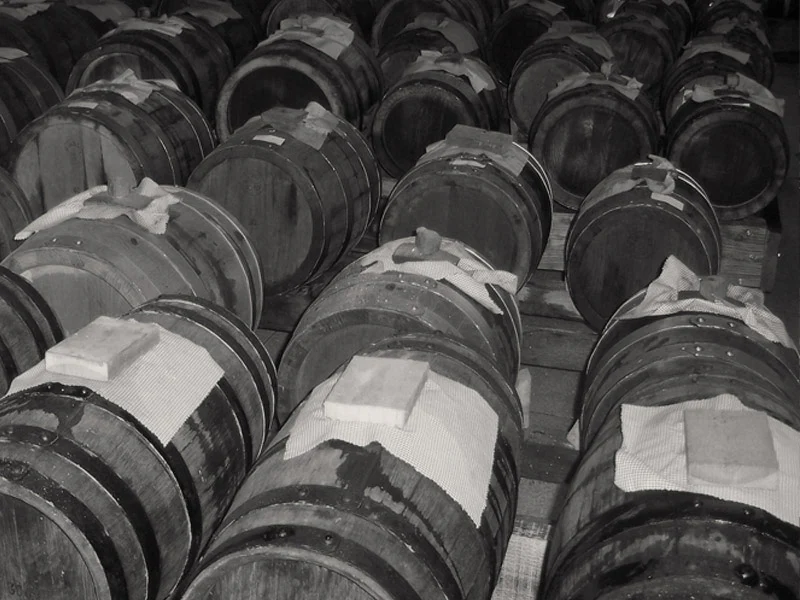
Some bottles are the result of decades of natural aging inside wooden barrels, protected by strict consortia in Emilia-Romagna. Others are made for everyday use under broader production rules.
Balsamic Vinegar Hub helps Australians understand origin, certification, production, and how to choose with confidence.
At its heart, balsamic vinegar of Modena comes from grapes.
In traditional forms, grape must is slowly cooked and matured for many years, concentrating flavour, aroma and texture.
Grapes are pressed into must and slowly concentrated.
Natural fermentation and acetification follow.
Years of aging in wooden barrels transform liquid into density, aroma and balance.
The longer the time, the deeper the character.
The Two Main Categories DOP vs IGP Explained
Most bottles belong to two universes.
Traditional Balsamic Vinegar (DOP) follows strict origin and aging rules, often measured in decades.
IGP offers a broader spectrum, from everyday kitchen use to more structured selections.
They are not the same product, even when they share the name.
Why It has such a prestige
Here, time is not marketing — it is production, evaporation reduces volume year after year.
Wood shapes perfume and families protect barrels across generations.
This is why real aged balsamic carries cultural weight far beyond flavour.
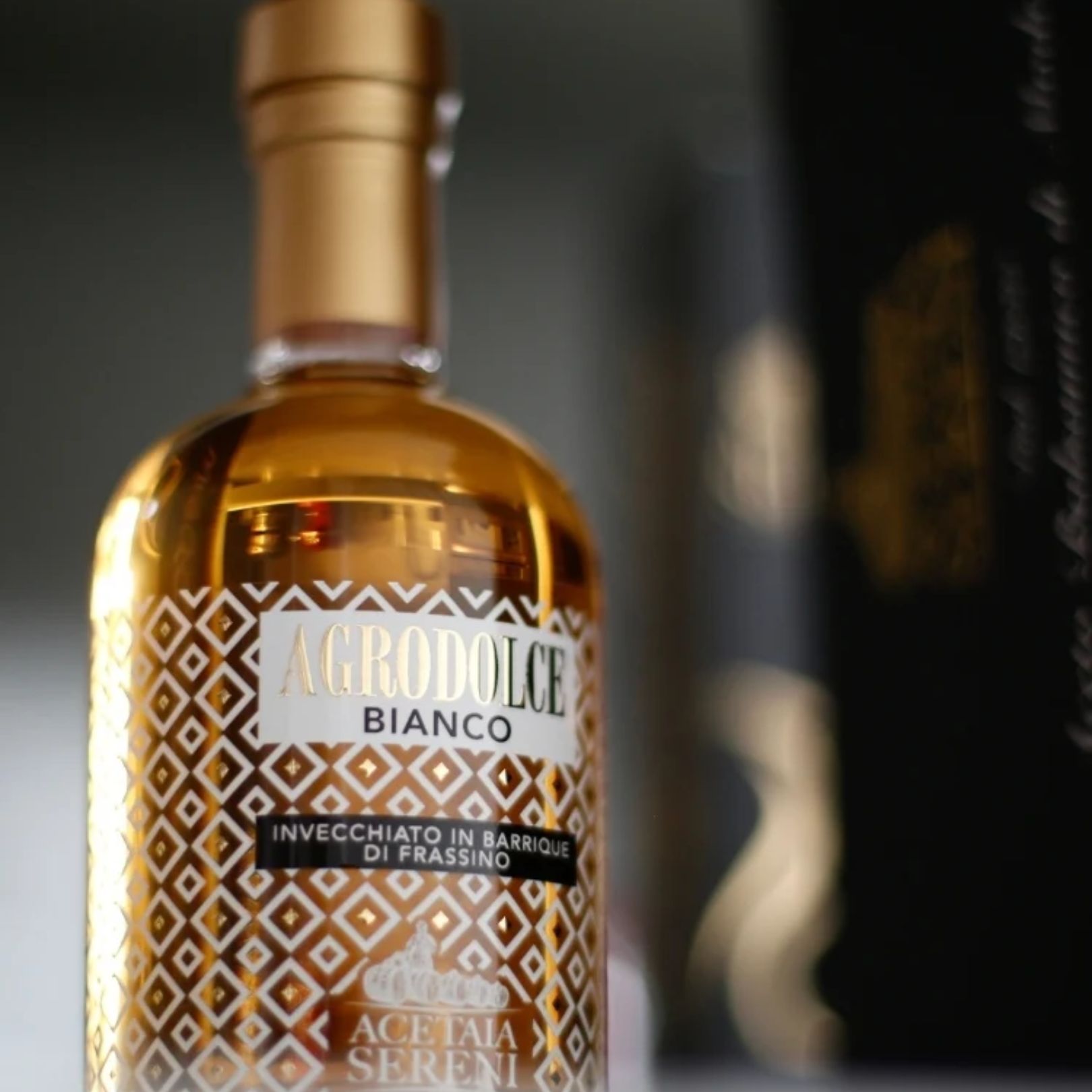
Chosen for its lighter colour and delicate profile, white balsamic suits seafood, vegetables and modern plating where visual elegance matters.
Understanding its method helps you select the right style.
Does thicker mean better?
In some cases, the equation “the thicker, the better”, may actually be incorrect.
Questions People Ask Every Day
Thousands of Australians search basic but important topics before buying.
How to Choose Without Regret
The best bottle depends on how you plan to use it.
Everyday cooking, finishing drops, gifting, or restaurant service require different approaches.
How to Choose Without Regret
The best bottle depends on how you plan to use it.
Everyday cooking, finishing drops, gifting, or restaurant service require different approaches.
Great food deserves clear understanding.
Yet too often, people find themselves navigating shelves filled with unfamiliar terms, dramatic price differences and confident claims without a simple way to interpret them.
We created this project to bring orientation back.
Our work begins from a belief that knowledge improves pleasure. When people understand origin, ingredients and transformation, they taste differently. They recognise balance, intention and craft. Curiosity replaces doubt, and choosing becomes a thoughtful act rather than a gamble.
This initiative grew from years of conversations with consumers first, but also chefs, retailers and producers who kept raising the same questions. Why do bottles vary so much? What do certifications really mean? How can something so small carry such history?
The answers existed, yet they were often fragmented, overly technical or difficult to access.
So we decided to gather them in one place.
Our approach is holistic.
Production methods, geography, regulation, tradition and modern distribution all shape what ultimately reaches the table. Remove one element and the picture becomes incomplete. Connect them, and the subject becomes logical and approachable.
We are independent in judgement and guided by transparency.
While we collaborate with selected producers and work alongside companies active in the market, the purpose of this platform is not to promote a specific label. It is to provide reliable structure so readers can develop their own understanding and choose with confidence.
Education is respect — for the families who maintain traditions, for professionals who serve their customers every day, and for individuals who want to make informed decisions.
If this project succeeds, appreciation becomes deeper, conversations become clearer, and trust replaces uncertainty.
That is why we are here.
Why Clarity Matters
Beyond information, there is also responsibility.
When terminology becomes blurred and shortcuts dominate conversation, the meaning of traditional foods risks fading. Clear explanation helps preserve distinctions that took generations to build. It ensures that effort, patience and regional knowledge remain visible rather than disappearing behind simplified marketing.
Producers benefit when their work is understood for what it truly requires.
Professionals benefit when they can communicate that value accurately to their clients.
Consumers benefit when expectations align with reality.
Transparency strengthens the entire ecosystem.
We believe appreciation grows when context is restored. Knowing how something is cultivated, transformed and protected creates connection. That connection encourages care — in how products are selected, used and discussed.
Informed audiences also drive better standards. When buyers recognise authenticity and method, quality becomes easier to defend and imitation loses ground.
For us, education is therefore not abstract.
It is a practical way to support continuity, reward integrity and encourage curiosity about one of gastronomy’s most complex traditions.![]()
![]()
![]()
![]()
